

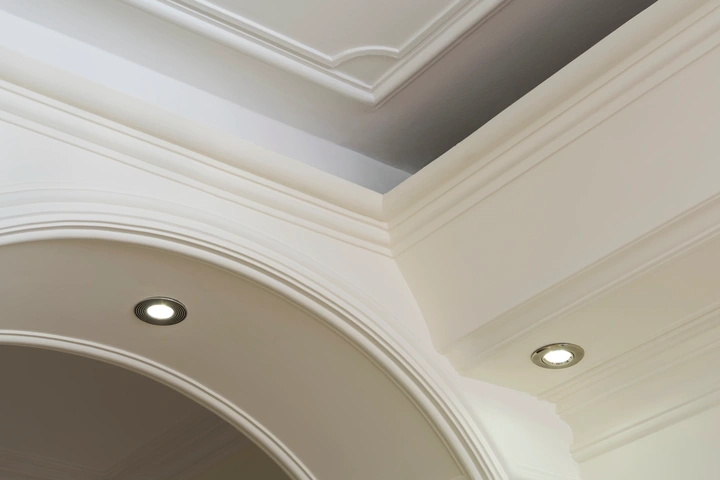
Framing the Sky: Victorian Moulding Millwork on the Ceiling
There’s something magical about Victorian-style interiors—the intricate details, timeless elegance, and historical charm. Victorian moulding, especially when used on ceilings, brings an air of sophistication that captivates architects, designers, and homeowners alike.
What Makes Victorian Moulding Unique
Victorian moulding features elaborate profiles, often adorned with floral motifs, scrollwork, and geometric patterns. On ceilings, these details draw the eye upward, creating a sense of grandeur in any room. It’s like gazing at an embellished sky, where the fascinating play of lines and shapes indulge the eyes while subtly elevating the spirit. The captivating detail woven into every piece channels a bygone era where craftsmanship and detail were highly revered, thus resulting in an inimitable timeless appeal.
Curved and scalloped edges are a hallmark, often featured on mouldings, trims, and medallions. Symmetrical elegance is another distinctive aspect of Victorian shapes. Gothic-inspired arches and pointed features are also common, lending a dramatic air to ceilings and walls. Additionally, octagonal and circular designs were often incorporated into ceiling medallions or decorative details, emphasizing the era’s penchant for elaborate and geometrically balanced aesthetics. These shapes are not just decorative but also a testament to the craftsmanship and artistry of the Victorian period.
Applications for Victorian Ceiling Moulding
Coffered Ceilings: Add depth and dimension with richly detailed moulding in recessed panels. The use of Victorian moulding in coffered ceilings is reminiscent of the grandeur found in places like the Palace of Westminster, London’s iconic government building which stands as a testament to the enduring allure of this ornamentation.
Medallions and Cornices: Frame chandeliers or light fixtures with stunning ornamental wood moulding. Medallions and cornices can serve as the crowning glory of your interiors, echoing the grandeur of historic homes like the Mark Twain House in Hartford.
The Mark Twain House in Hartford, Connecticut is an exemplary representation of Victorian Gothic architecture, which was highly popular during the late 19th century. The house features intricate detailing and lavish artistry, including wood medallions that enhance its historic charm. These medallions, often found framing light fixtures or adorning ceilings, reflect the opulence and craftsmanship characteristic of the era. The use of such ornate elements in the Mark Twain House showcases the Victorian penchant for blending functionality with decorative elegance.
Restorations: Victorian Mouldings are often used to restore historical accuracy to older homes and commercial properties, thus preserving heritage and perpetuating the legacy of a bygone era.
Modern Use of Victorian Moulding: While rooted in history, Victorian moulding can also complement modern spaces. By pairing intricate ceiling designs with contemporary window openings, architects achieve a unique blend of old and new. This design approach has been beautifully embraced in TV shows like Netflix’s Bridgerton where Victorian detailing coexists with some modern aesthetics, creating spaces that are both familiar and refreshingly new.
Exterior Ceilings and Victorian Moulding
The exterior ceiling under a deep overhang is commonly referred to as a soffit. Traditionally, soffits serve both a functional and aesthetic purpose, providing ventilation to roof structures while contributing to the building’s overall design. Victorian-style moulding can indeed be incorporated into soffits to enhance their visual appeal. By adding intricate trim or decorative cornices inspired by the Victorian era, soffits can become standout architectural features. This approach not only preserves the charm of Victorian design but also brings a touch of elegance to outdoor spaces, particularly on porches, verandas, or grand entrances.
A Sum That’s More Than Its Parts
Victorian-style architecture is renowned for its elaborate and ornate design, and moulding plays a significant role in achieving this aesthetic. Below are the key types of moulding commonly used in Victorian-style interiors and exteriors:
Key Victorian Moulding Parts and Their Definitions
Victorian-style moulding is characterized by its intricate detail and unique craftsmanship, with various components contributing to the overall look. Here are fifteen common Victorian moulding parts and their definitions:
- Crown Moulding – A type of moulding installed where the wall meets the ceiling, adding elegance to a room.
- Cornice – A decorative moulding that crowns a wall or cabinet, often featuring intricate patterns or ornamentation.
- Baseboard – A moulding placed at the junction of the wall and floor, protecting walls and providing a finished appearance.
- Picture Rail – A horizontal moulding installed high on a wall for hanging pictures without damaging the wall surface.
- Chair Rail – A moulding placed partway up a wall to protect it from chair backs and create a decorative element.
- Wainscoting – Decorative paneling or moulding applied to the lower portion of a wall for both aesthetics and durability.
- Corbel – A bracket or block projecting from a wall to support beams or add ornamental detail.
- Panel Moulding – Slim mouldings used to create decorative framed panels on walls or ceilings.
- Dentil Moulding – A series of evenly spaced rectangular projections used as ornamentation, typically found in cornices.
- Architrave – The moulding or frame surrounding a door or window to provide a decorative transition.
- Rosette – A circular, floral-patterned decorative element often used at the intersection of mouldings or in ceilings.
- Plinth Block – A decorative block placed at the base of a door or wall moulding to provide a visual foundation.
- Cove Moulding – A concave-shaped moulding used where walls and ceilings meet to create a smooth and elegant transition.
- Egg and Dart – A classic ornamental pattern consisting of alternating oval (egg-shaped) and arrow-like (dart-shaped) elements, commonly found in cornices and frames.
- Bead Moulding – A series of small, rounded projections resembling a string of beads, used for decorative detailing on furniture or trim.
Each part serves both practical and aesthetic functions, bringing timeless charm and sophistication to Victorian-style interiors and exteriors.
Lowpensky Moulding’s Craftsmanship
At Lowpensky Moulding, we specialize in creating authentic Victorian moulding with our blades that honors traditional craftsmanship while meeting modern standards. Our ceiling moulding is meticulously fabricated to elevate any space, be it residential or commercial. This melding of the old-world charm with present-day precision allows us to cater to a vast array of design requirements.
A View to Remember
Just as the sky fills the canvas of our outdoors, the ceiling moulding serves as the sky within the enclosed spaces. Victorian moulding on the ceiling not only frames this inner sky but also imbues it with a unique character and depth. So, whether you are stepping into a Victorian-era living space in a residential project or walking beneath the ornate ceiling of a commercial property, the sky is truly the limit in moulding shapes.
Frame your next project’s view upward in timeless elegance. Explore our Victorian moulding in our collection and discover how Lowpensky Moulding can bring historical charm to your ceilings to be cherished for decades to come. Let Victorian moulding create dreamy rooms for you, turning every glance to the ceiling into a moment of aesthetic awe.
Just like the expansive stretch of the sky above us, the potential of Victorian moulding is tremendous and delightful. When it comes to crafting your dream space, remember, the sky is your only limit. Start your next project now!
DISCLAIMER
The information in this article is provided solely for general informational purposes and does not constitute professional, technical, legal, or regulatory advice. Codes, permitting requirements, and construction standards vary by jurisdiction. Consult a licensed architect, engineer, contractor, professional designer, and your local building authorities before beginning any project. Lowpensky Moulding assumes no responsibility or liability for actions taken based on the content of this article.