


Photo credit: Metaphor Edge,
Location: Private Residence, San Francisco, California,
Wood Highlights: Painted vertical trim profiles show outside corners of the window projection where corner mouldings can be useful for protection and aesthetics
Corner Mouldings Corner the Trim Efficiently and Neatly
In architectural design, corners are where craftsmanship shows. Corner mouldings conceal seams, protect vulnerable edges, and elevate trim work from simple construction to a refined finish. Whether it’s interior corner trim in a paneled entryway or outside corner mouldings on a Victorian facade, these profiles unify design while improving durability.

Lowpensky offers a simple eased edge profile, LM-M003,
while LM-M004 adds historic detailing for restoration or ornamentation, providing continuous protection.
Custom profiles are also available.
Efficiency and Elegance Combined
Corners are exposed to wear — inside from daily traffic, outside from weather. Decorative trim mouldings such as LM-M003 and LM-M004:
- Protect edges from impact or moisture.
- Conceal irregularities where surfaces meet.
- Add continuity across crown, baseboard, and panel systems.
- Provide architectural corner detail that complements both modern and historic projects.
Precision-milled in natural wood to your specification, they provide crisp transitions that save labor and provide continuous protection while achieving architectural quality.
Best Practices and Preservation Guidance
Architectural standards highlight the importance of corner mouldings in both durability and design. The National Park Service Preservation Briefs recommend maintaining wood trim details to preserve historic character, while publications like Traditional Building Magazine emphasize the role of mouldings in architectural integrity. For modern construction, trade resources such as Fine Homebuilding continue to show how trim and wood corner profiles can simplify installation while elevating design.
High-profile restorations such as SOM’s work on the Waldorf Astoria in New York, covered by Dezeen, also demonstrate how interior panelling and trim — including inside and outside corner details — remain essential to preserving architectural character.
San Francisco licensed General Contractors such as Fontana & Company, specialists in historic restoration, demonstrate how accurate trim and moulding details are essential to preserving architectural integrity in projects. General contractors frequently collaborate with millwork fabricators like Lowpensky to reproduce profiles, including corner mouldings, that match original designs while meeting modern performance needs.
In San Francisco, preservation organizations such as SF Heritage and the California Preservation Foundation also recognize the importance of trim details in maintaining architectural identity and offer valuable resources. Educational programs such as the California Preservation Foundation’s Preservation Bootcamp further emphasize the importance of accurate moulding and trim details in restoration work. These trainings ensure that both architects and contractors stay informed on best practices for maintaining California’s architectural heritage.
Examples in Historic San Francisco Architecture
San Francisco Residences – Outside & Inside Corners

Photo credit: Metaphor Edge,
Location: Private Residence, San Francisco, California,
Wood Highlights: Crisp painted corner trim
At this more modern San Francisco home seen above, sharp trim edges demonstrate how corner mouldings can be installed to achieve efficiency in protection and clean lines.

Photo credit: Metaphor Edge,
Location: Private Residence, San Francisco, California,
Wood Highlights: Interior corner mouldings integrated with painted panel trim
Interior corner mouldings unify paneled walls, with rounded or flat edge profiles, concealing seams while enhancing unique design details at this landmark home designed by renowned architect Bernard Maybeck.

Photo credit: Metaphor Edge,
Location: Private Residence, San Francisco, California,
Wood Highlights: Exterior corner mouldings paired with window trim and door surrounds can heighten the overall design in a restoration project
The richly ornamented darkly painted facade in San Francisco appears to use corner mouldings at the exterior.

Photo credit: Metaphor Edge,
Location: Private Residence, San Francisco, California,
Wood Highlights: expert trim detailing on display at this facade with opportunities for corner mouldings and more
This San Francisco Victorian demonstrates how corner mouldings can unify complex facades, useful for turret windows to garage openings with properly detailed trim.

Photo credit: Metaphor Edge,
Location: Private Residence, San Francisco, California,
Wood Highlights: Corner mouldings and trim profiles can reinforce edges at entry designs
This yellow and white neoclassical entry shows how corner mouldings can strengthen architectural transitions while adding ornament.
Many architects and builders use trim in inventive ways, applying corner profiles not only for protection but also to reinforce design intent. When the shape is conducive, wood mouldings are versatile and can be adapted for windows, doors, ceilings, or exteriors, extending their role beyond the original function to become defining features of the overall composition.
Hamlin School – Historic Ceiling Entry
At the Hamlin School, built up wood mouldings articulate coffered ceiling panels near stone elements, where corner details unify structure and ornament.
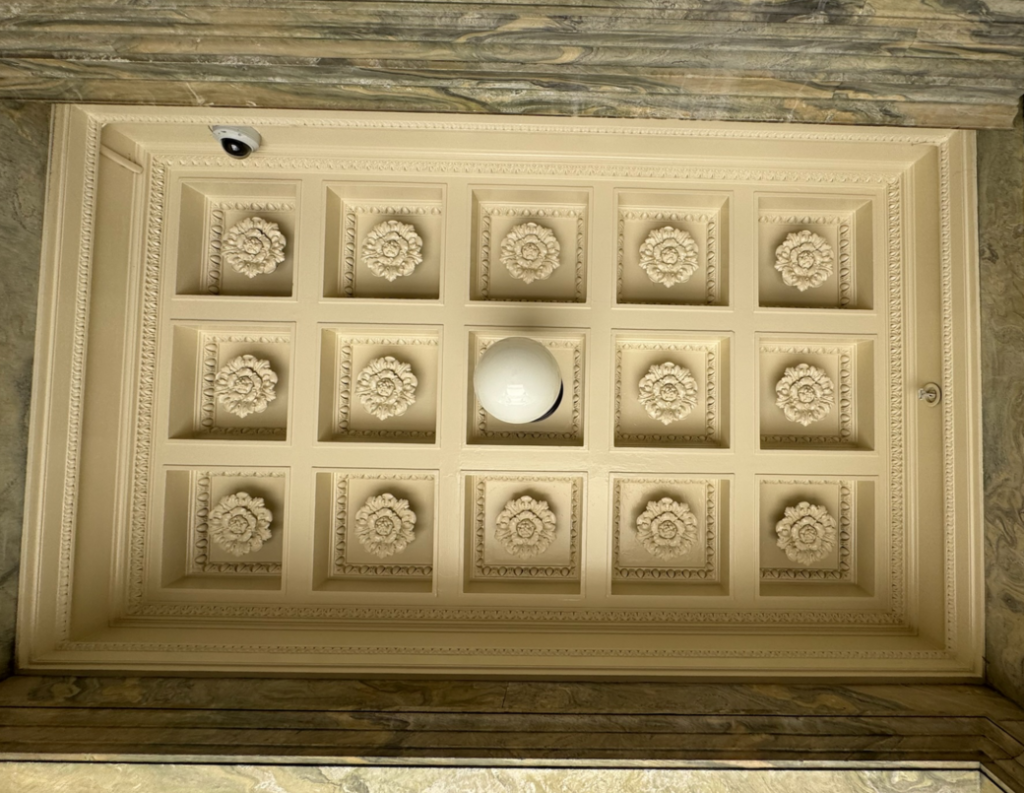
Photo credit: Metaphor Edge,
Location: Hamlin School, San Francisco, California,
Wood Highlights: Crown moulding, corner moulding and unique wood trim profiles enhance the ceiling at this historic restoration project
Haas–Lilenthal House – Victorian Window Trim
At the Haas–Lilienthal House, historic corner mouldings highlight bay windows, a Victorian method of protecting joints and enriching facades.

Photo credit: Metaphor Edge,
Location: Haas-Lilenthal House, San Francisco, California,
Wood Highlights: Crown moulding, corner moulding and built up wood trim profiles enhance the facade at this remarkable historic restoration project
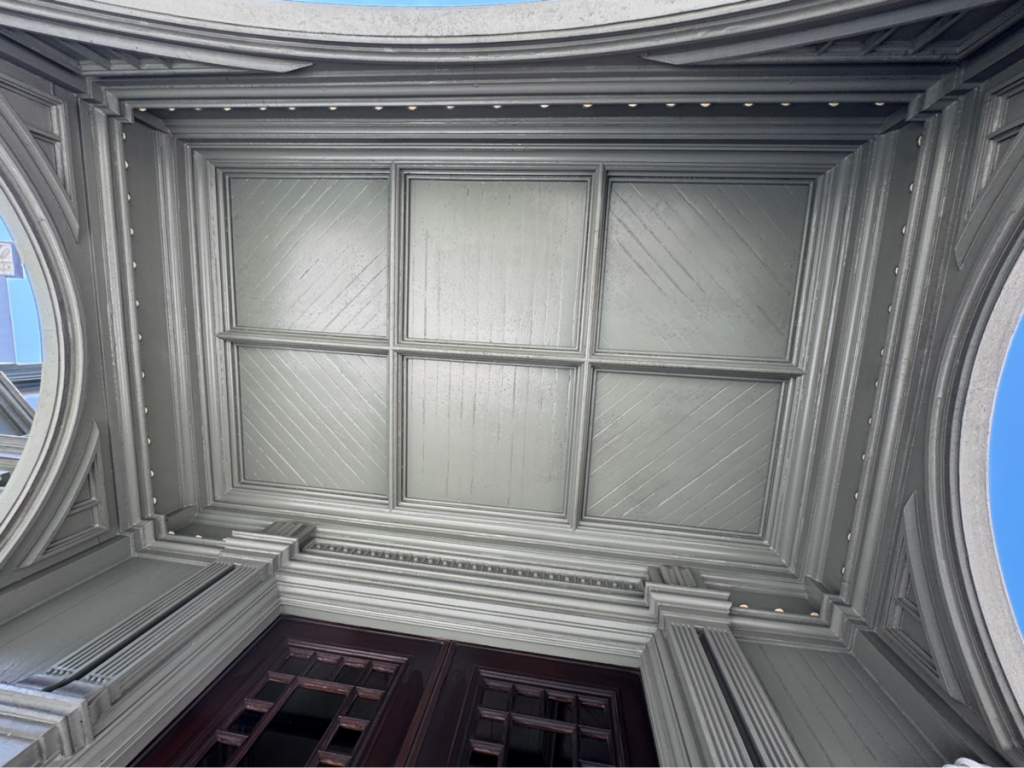
Photo credit: Metaphor Edge,
Location: Haas-Lilenthal House, San Francisco, California,
Wood Highlights: Crown moulding, corner moulding and unique wood trim profiles enhance the ceiling at this historic restoration project
Inside the entry, mouldings frame the ceiling area with precise corner details, expertly mitered, unifying geometry and adding depth to this historic interior at the landing, making an undeniably strong first impression.
Lowpensky Catalog Profiles
Lowpensky’s LM-M003 and LM-M004 give builders and designers flexible options:
- LM-M003: Minimal eased edge profile, efficient for modern interiors and exteriors.
- LM-M004: Decorative detail, ideal for restorations or period-style projects.
By offering both streamlined and ornate versions, Lowpensky ensures architects and designers can select the right wood corner profiles for each application. Custom profiles and sizes are also available to achieve your design and performance goals.
Further Reading
- Wood Gutters Historic Use Offers Functional Design Heritage
- Exterior Water Table Moulding: Classic Detail with Modern Purpose
- Some Like It Not Hot: Wood Brise-Soleil in Design
- Age in Place with Grace with Custom Wood Railings
FAQ’s About Corner Mouldings
What are corner mouldings used for?
They protect corners, conceal joints, and provide a finished look that complements other trim.
Can corner mouldings be used outside?
Yes. Outside corner mouldings protect siding edges, ensure crisp transitions, and add durability to exteriors.
Were corner mouldings used historically?
Yes. They appear in both interiors (coffered ceilings, panel trim) and exteriors (entry vestibules, facades) throughout San Francisco’s historic architecture and the SF Bay Area.
What’s the difference between LM-M003 and LM-M004?
LM-M003 has a clean, subtly rounded profile for efficiency. LM-M004 adds historic ogee detail, suited to restorations or decorative projects.
Do corner mouldings save time?
Yes. They reduce miter cuts, simplify installation, and deliver consistent results.
Can corner mouldings be decorative as well as functional?
Absolutely. Custom profiles can be made and historic buildings show how corner trim can carry curved or flat edged faces, merging function with design expression.
Corner Mouldings Made to Order
At Lowpensky, we understand that every project has its own character. That’s why we offer corner mouldings made to order, whether you need a clean, efficient profile like LM-M003, a detailed historic option like LM-M004, or a custom design based on your samples and drawings. Our team will match, mill, and scale historic or new profiles to fit the exact needs of your residential or commercial project.
Contact Lowpensky today to discuss your project and explore how our corner mouldings can bring efficiency, durability, and design detail to an edge. Visit our catalog to get started.

Photo credit: Metaphor Edge,
Location: Private Residence, San Francisco, California,
Wood Highlights: Painted corner mouldings framing bay windows and trim profiles, soffits and edge details, define the facade’s projections and unify the Victorian detailing
DISCLAIMER
The information in this article is provided solely for general informational purposes and does not constitute professional, technical, legal, or regulatory advice. Codes, permitting requirements, and construction standards vary by jurisdiction. Consult a licensed architect, engineer, contractor, professional designer, and your local building authorities before beginning any project. Lowpensky Moulding assumes no responsibility or liability for actions taken based on the content of this article.