


Photo credit: Metaphor Edge
Location: San Francisco, California
Wood Highlights: Detail view of wood gutter outlet integrated into ornate mouldings. The carved trim and gutter system highlight how water management was treated as part of the functional and aesthetic design.
Wood Gutters Historic Use Offers Functional Design Heritage
Wood gutters are truly special. You won’t find them in stock at a big-box store, and you certainly won’t find an exact match for a historic profile sitting on a shelf. Most were originally hand-crafted when your home or building was first constructed, designed to blend seamlessly with cornices and trim. They don’t make them like they used to, but Lowpensky Moulding still mills custom wood gutters to make historic profiles.
Architects, preservationists, and building owners turn to Lowpensky when wood gutters need repair or replacement. Our team can replicate historic profiles for installers to splice into existing runs, or we can mill a completely custom gutter to match your drawings or samples. With Lowpensky, you can trust that your roofline and trim will remain both protected and authentic.
Wood gutters are more than water management, they are an integral part of the architectural features that shaped the rooflines of historic homes and civic buildings. From Victorian cornices to Tudor Revival eaves to classical architecture, wood gutters integrated form and function, protecting structures while reinforcing architectural character.
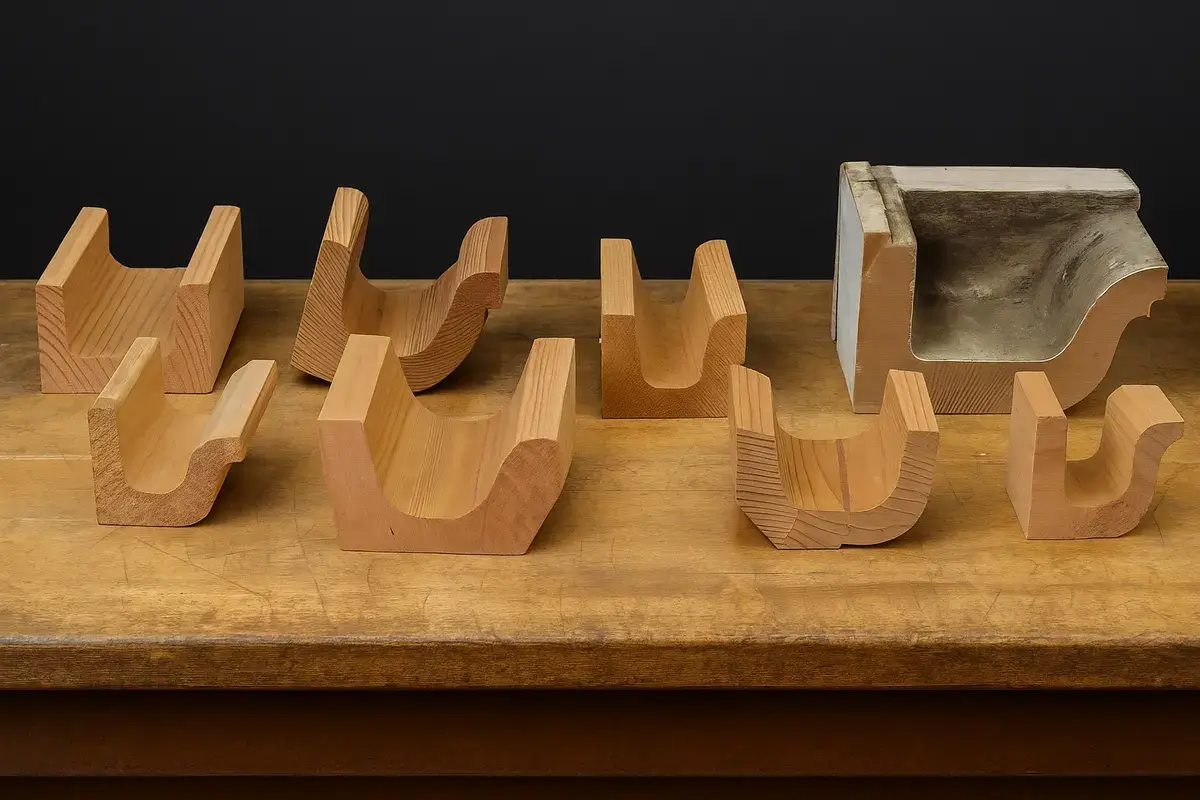
Photo credit: Lowpensky Moulding
Wood Highlights: custom wood gutter profile samples milled for historic restoration and residential projects.
What Is a Wood Gutter
A wood gutter is a profiled channel milled from solid lumber and installed along roof edges to carry water away from a structure. Traditionally:
- Profiles – half-round, ogee, or custom shapes to align with period moulding
- Materials – rot-resistant woods like redwood or cedar
- Integration – often paired with cornices, fascia boards, and period mouldings
In practice, wood gutters:
- Manage rainwater while preserving roof and wall integrity
- Provide visual continuity with historic wood trim
- Reinforce stylistic intent in period design
A Detail Rooted in History
Wood gutters date back centuries. As part of historic building traditions:
- Victorian architecture – paired with elaborate cornices and moulding profiles
- Tudor Revival – integrated into steep gables with dark trim
- Craftsman bungalows – simple, sturdy gutter lines aligned with exposed rafters
As the National Park Service Technical Preservation Services notes, “gutters and downspouts are the principal means by which water is conveyed off a roof and away from a building,” underscoring their essential role in protecting historic architecture and preventing water damage. By the 19th century, gutters became a standard feature of American houses, often integrated into cornices and mouldings, as seen on San Francisco’s ornate Victorians. In San Francisco and across Northern California, redwood was historically the preferred material for wood gutters. Its natural rot resistance and local availability made it the standard choice for Victorian houses, many of which still retain their original redwood gutters today.
San Francisco Examples: Wood Gutters in Context
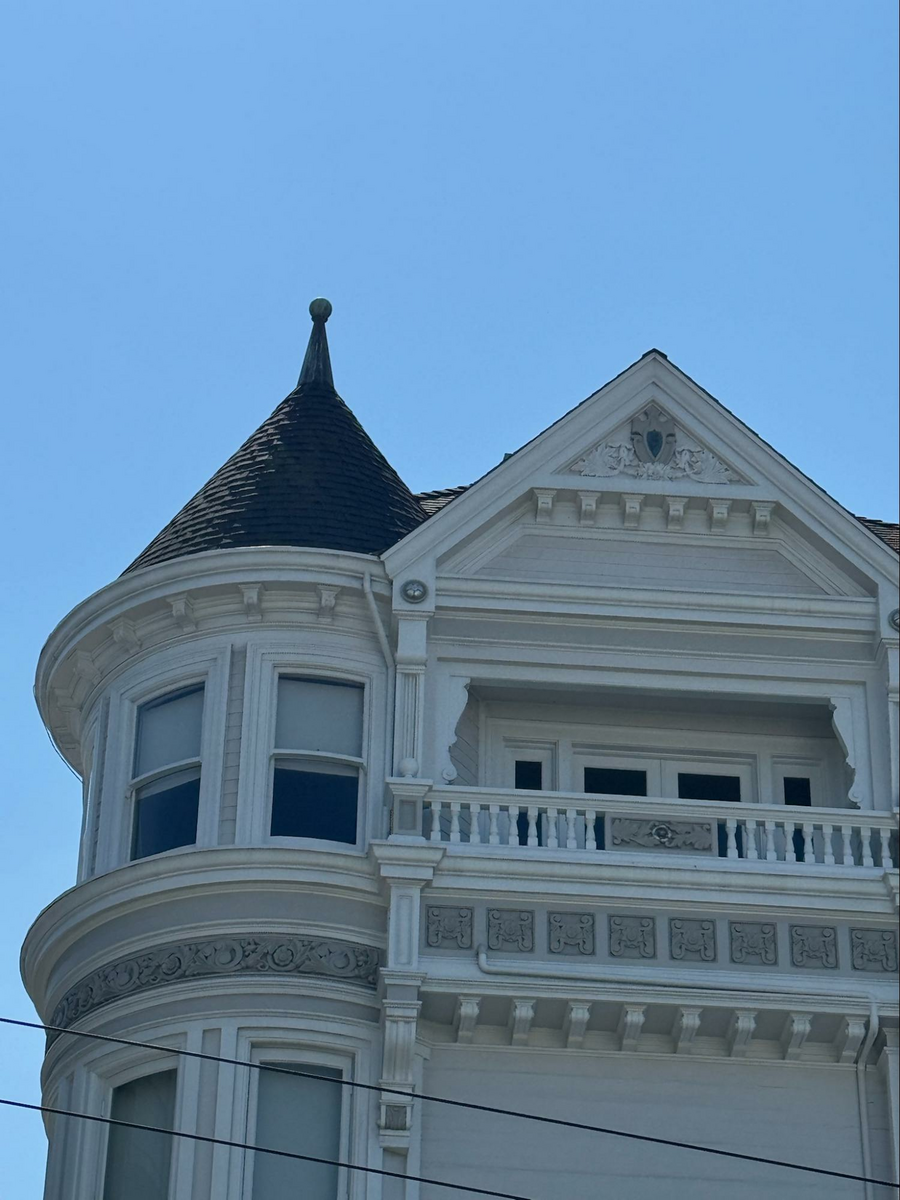
Photo credit: Metaphor Edge
Location: San Francisco, California
Wood Highlights: Close view of turret roofline showing wood gutter integrated into the cornice. The gutter profile aligns with decorative mouldings, illustrating craftsmanship and historic continuity.
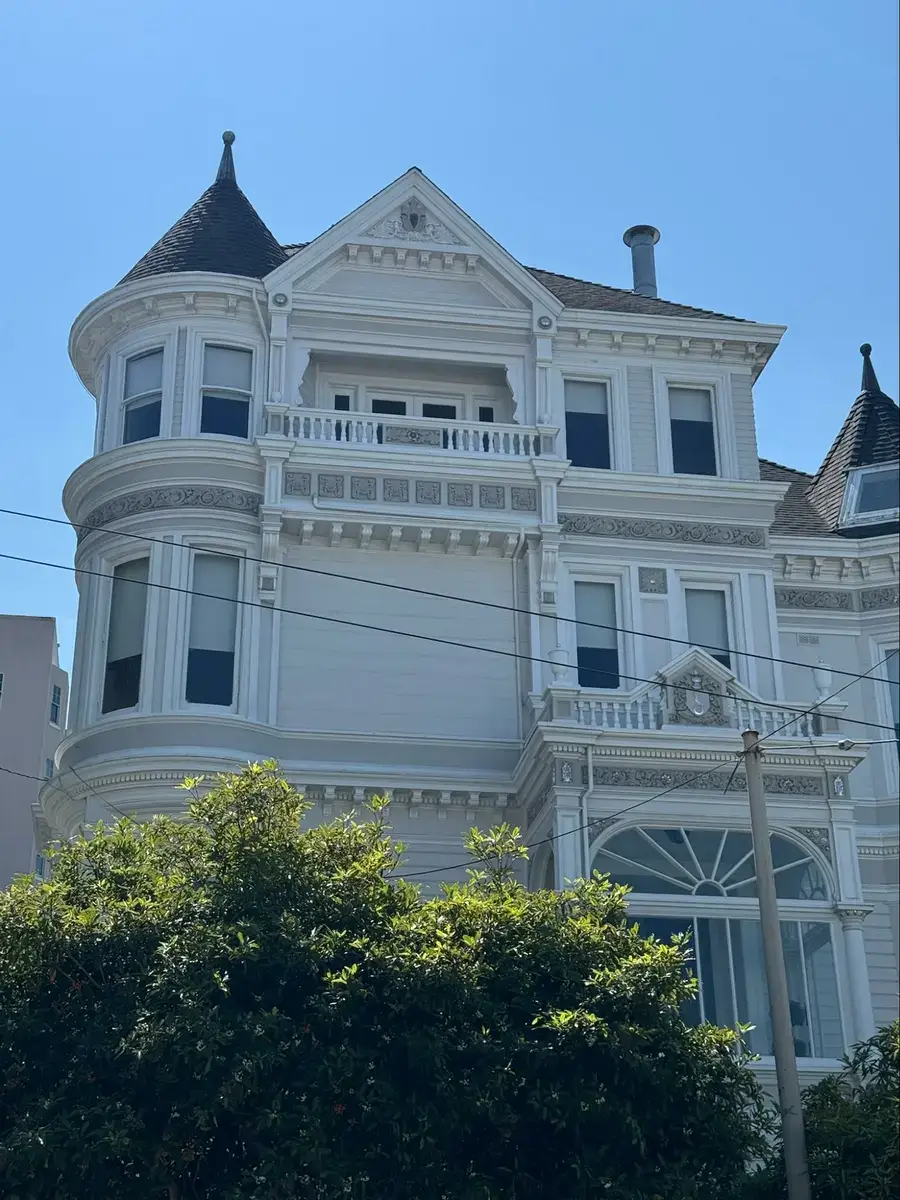
Photo credit: Metaphor Edge
Location: San Francisco, California
Wood Highlights: Ornate Victorian residence with integrated wood gutters at the eaves. Gutters are typically milled to match period moulding profiles, blending seamlessly with elaborate cornices and trim.

Photo credit: Metaphor Edge
Location: San Francisco, California
Wood Highlights: Full elevation of a San Francisco residence showing continuous wood gutter lines across the upper story. The gutter profile complements ornate mouldings and contributes to the home’s historic character.
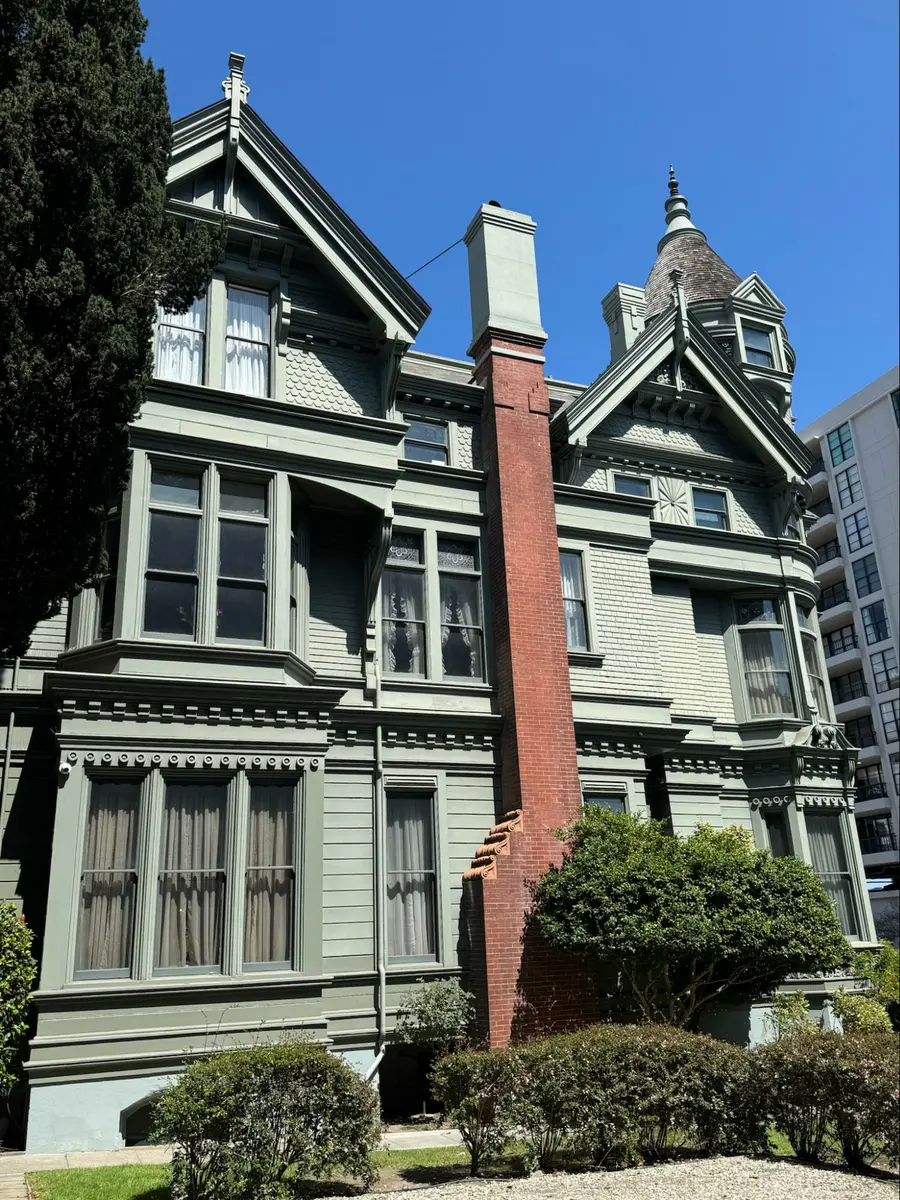
Photo credit: Metaphor Edge
Location: San Francisco, California
Wood Highlights: The Haas–Lilienthal House, an 1886 Queen Anne Victorian, retains its historic wood gutters integrated into the cornice. These gutters blend with elaborate mouldings, protecting the structure while maintaining architectural integrity.
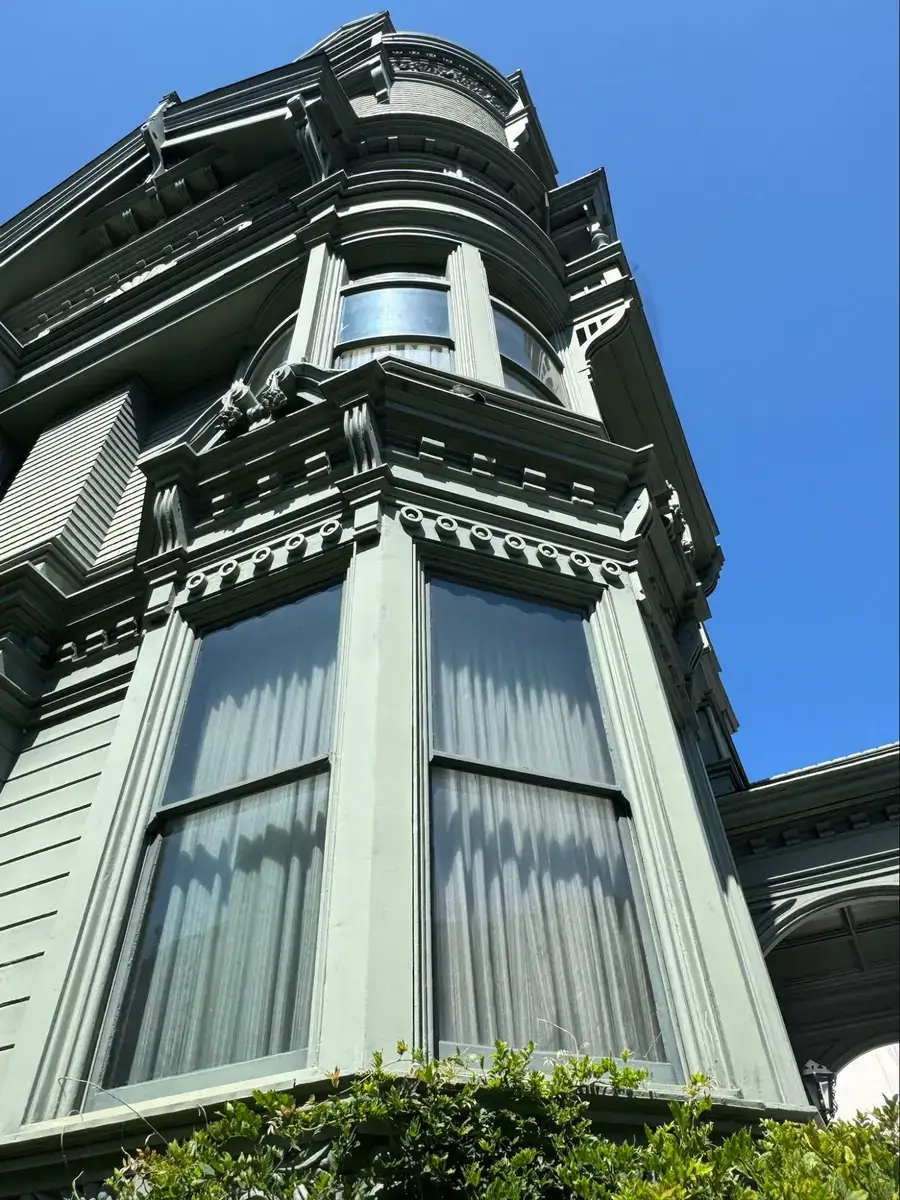
Photo credit: Metaphor Edge
Location: San Francisco, California
Wood Highlights: Another facade view of the Haas–Lilienthal House, showing wood gutter lines following the steep gables and turrets. The gutters align with decorative mouldings, demonstrating how functional elements were fully integrated into the design language.
When Wood Gutters Need to Be Replaced
Wood gutters, while durable, eventually show signs of wear:
- Rot or splitting from long-term water exposure
- Joint separation and leaks
- Loss of profile detail through weathering
In restoration, gutters can be milled to match historic profiles and spliced into existing runs. Lowpensky specializes in providing custom wood gutter profiles to preserve both function and historic accuracy. The National Park Service recommends repair whenever possible, since much of a wood gutter’s integrity can often be preserved. When replacement is necessary, the Secretary of the Interior’s Standards for Rehabilitation, along with San Francisco’s Historic Preservation Design Guidelines, call for profile-matching replacements to maintain historic proportions and architectural integrity. Using authentic wood gutters ensures both compliance with preservation standards and protection of the building’s historic character.
Specifying Wood Gutters
When ordering or restoring wood gutters, clear specifications ensure the right fit and performance:
- Profile / Shape – half-round, ogee, K-style, or a custom historic profile such as Lowpensky’s LM-M031 or provide a drawing or sample of existing gutter
- Dimensions – trough width and depth, back height, front height, and wall thickness (¾”–3″ depending on profile)
- Length – typically ordered in 8’, 10’, 12’, or 16’ runs; longer runs reduce joints and leaks
- Wood Species – redwood and western red cedar are traditional choices for rot resistance
- Finish or Lining – bare, primed/painted, or lined with copper or EPDM for extended service life
- Accessories / Integration – outlets, miters, end caps, and connections with fascia boards or rafter tails
This information allows Lowpensky to produce authentic wood gutters that integrate seamlessly with historic trim and meet modern performance needs. Historically, many wood gutters were lined with sheet metal such as copper or tin to extend their service life. Today, modern preservation projects may use elastomeric coatings or EPDM liners to provide the same protection while retaining the authenticity of wood profiles.
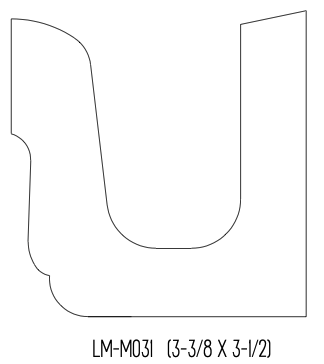
Lowpensky Moulding catalog page 28 shows a wood gutter profile LM-M031
Wood Gutters at Lowpensky
The LM-M031 wood gutter profile (on page 28 in the catalog also shown above) replicates traditional proportions used in historic homes. Available in custom lengths and species, it ensures continuity and authenticity in preservation projects.
Performance and Craft
Unlike aluminum or vinyl substitutes, wood gutters:
- Blend seamlessly with historic wood trim
- Can be repaired in sections rather than replaced wholesale
- Provide authentic detail for preservation and architectural integrity
Because wood is a renewable and repairable material, it also offers environmental advantages over vinyl or aluminum alternatives. Requesting sustainably harvested, FSC-certified lumber for your wood gutters and trim allows architects and builders to preserve historic character while supporting modern green building practices.
Maintenance Matters
NPS emphasizes that gutters must be kept clear of debris and inspected regularly. Overflow from clogged gutters can cause significant damage to siding, windows, and foundations. Proper maintenance (regular cleaning, protective linings, and finishes) extends their service life significantly. Preservation experts at the Wisconsin Historical Society emphasize that “gutters are critical to the health of your historic house. Gutters prevent roof water from saturating the sides of your house and channel the water away from your foundation.”
Comparing Wood Gutters to Other Materials
- Galvanized Steel – durable but prone to rust if protective coatings fail
- Painted Aluminum – lightweight and low-maintenance but visually modern and incompatible with historic trim
- Copper – long-lasting and develops a beautiful patina, but stylistically mismatched for many Victorian and Tudor designs
- Vinyl (PVC) – inexpensive and easy to install, but prone to cracking, warping, and short lifespans (often <15 years). Profiles are limited and lack the authenticity required for period architecture.
By comparison, wood gutters are repairable, customizable, and historically accurate, making them the superior choice for restoration and preservation.
FAQs About Wood Gutters
Wood Gutter Definition
A wood gutter is a traditional roof-edge channel milled from solid wood to manage water while maintaining historic detail.
Durability of Wood Gutters
With proper care and linings, wood gutters can last 20–30 years, and in some cases over 50 years.
Design Options for Wood Gutters
Profiles range from half-round and ogee to fully custom mouldings matched to period trim.
Specifying Wood Gutters
When specifying a wood gutter, architects provide the builder with details on profile, dimensions, length, species, finish, and accessories to ensure the gutter integrates properly with the architecture.
Wood vs. Vinyl Gutters
Vinyl gutters are inexpensive but warp, crack, and lack historic authenticity. Wood gutters are far more durable, repairable, and suited to authentic preservation.
Final Thoughts
Wood gutters remain one of the most distinctive yet functional elements of historic architecture. Their ability to manage water while reinforcing style makes them indispensable to preservation work.
Further Reading
- Meet in the Middle: Astragals Bridge the Gap with Style
- The Art of the Window Sill: Classic Design for Openings
- Stucco Moulds for Solid Installations: Classic Style in Exterior Trim
Wood Gutters Made to Order
Wood gutters are truly special, and finding them today is rare. They’re not mass-produced, and no two historic profiles are exactly alike. That’s why Lowpensky Moulding mills every gutter with care, replicating the originals that craftsmen once built by hand. Whether you need a section spliced into an existing run, a full replacement for historic wood gutters, or a completely custom profile matched to your drawings or samples, Lowpensky Moulding can deliver. Our catalog includes historic standards like the LM-M031, and our shop mills custom runs in durable woods to your exact specifications. Contact us today with your drawings and details to start your custom order. When it comes to custom wood gutters and moulidngs, you’ve come to the right place.
DISCLAIMER
The information in this article is provided solely for general informational purposes and does not constitute professional, technical, legal, or regulatory advice. Codes, permitting requirements, and construction standards vary by jurisdiction. Consult a licensed architect, engineer, contractor, professional designer, and your local building authorities before beginning any project. Lowpensky Moulding assumes no responsibility or liability for actions taken based on the content of this article.