Eras Tour: 100 Architectural Styles That Employ Moulding Near Me
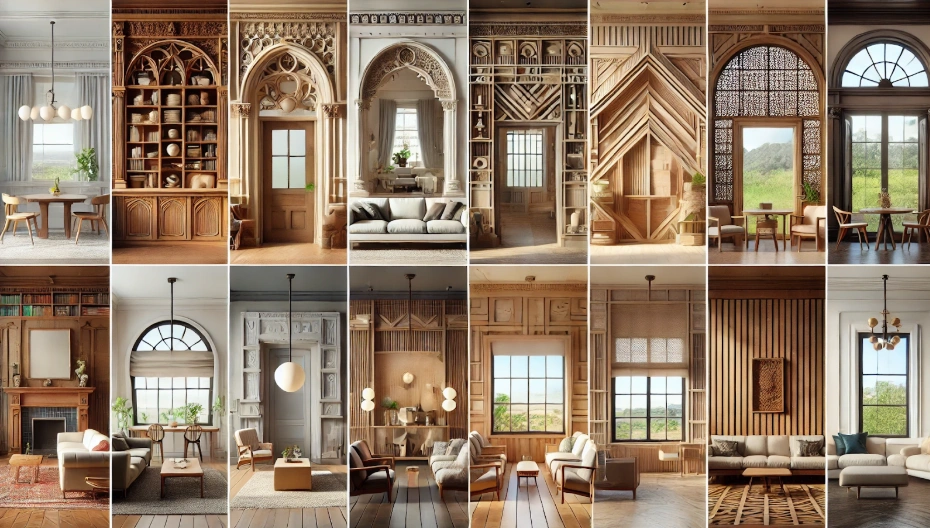
Explore how exterior and interior mouldings (or moldings) have evolved across architectural eras and styles, showcasing their versatility in enhancing design and functionality. Upgrade your project with premium exterior or interior moulding made near you in San Francisco—find decorative trims that add character and charm to every room. Your search for “moulding near me” is here.
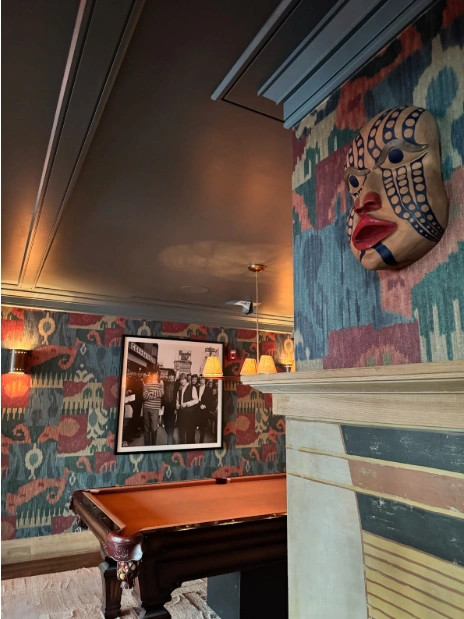
Photo credit: MetaphorDesign.com Location: Game Room, Bungalow Kitchen, Tiburon, California Moulding Highlights: Baseboard, Crown, Decorative Trim on walls and ceiling
Classical and Ancient Eras
Adirondack – Rustic, natural wood trim in mountain cabins.
American Colonial – Simple trims and wainscoting in early settlements.
Antebellum – Grand Southern homes with ornate wood paneling.
Art Deco – Geometric, streamlined wood accents.
Art Nouveau – Flowing, nature-inspired wood carvings complementing wood moulding panels.
Bungalow – Functional wood trim and exposed beams.
Cape Cod – Symmetrical, understated wood details.
Caribbean Colonial – Decorative wood shutters and wood railings.
Chateau Revival – Castle-like architecture with intricate trims.
Colonial Revival – Symmetry and elegance with decorative paneling.
Contemporary – Flat profiles with mitered corners, minimally applied
Craftsman – Natural wood moldings and handcrafted details.
Dutch Colonial – Gambrel roofs with wood trim.
Federal – Thin, delicate wood trims with elliptical motifs.
Georgian – Classical moldings with dentil patterns.
Gothic Revival – Intricate tracery and pointed wood arch details.
Greek Revival – Bold wood cornices and pilasters.
Italian Renaissance – Classical cornices and trims.
Photo credit: MetaphorDesign.com Location: The Library, The Proper Hotel, Santa Monica, California Moulding Highlights: Decorative wall trim and tall baseboards
Medieval and Romantic Eras
Italianate – Decorative brackets and arched wood windows.
Jacobean – Early English homes with carved wood panels.
Jeffersonian – Classical wood columns and trims.
Log Cabin – Large rough-hewn wood accents.
Mission Revival – Arched doors and carved wood beams. Panels with square grid patterns.
Moorish Revival – Geometric, curved wood trim with peaks in interiors.
Monterey Colonial – Wood balconies and trim blending Spanish and Colonial styles.
Neo-Classical – Revival of Greek and Roman forms in woodwork.
Neo-Gothic – Modern pointed wood trims and tracery.
Neo-Victorian – Contemporary takes on ornate Victorian trims.
Norman Revival – Medieval-inspired wood timbering.
Plantation – Southern homes with decorative wood columns.
Prairie Style – Horizontal natural wood detailing in trim.
Pueblo Revival – Southwestern homes with elaborate wood rough hewn wood timbers.
Queen Anne – Ornate spindle work and wood detailing.
Richardsonian Romanesque – Heavy wood arches in interiors.
Rustic – Organic, rough-hewn wood moldings.
Saltbox – Simple, functional Colonial wood trims.
Scandinavian Modern – Minimalist wood finishes.
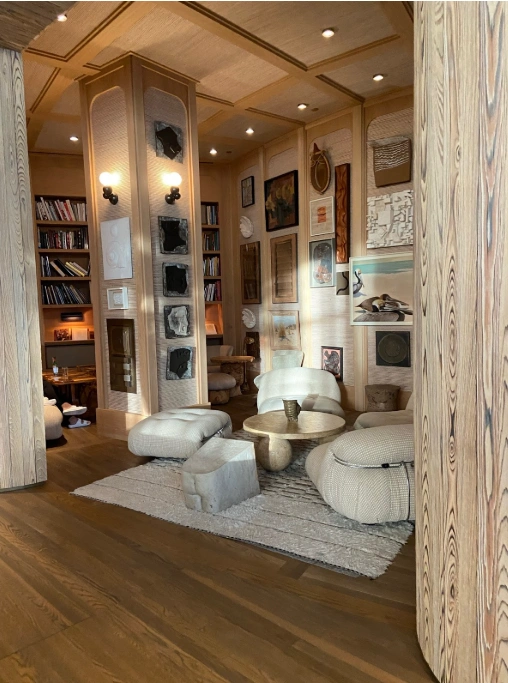
Photo credit: MetaphorDesign.com Location: The Library, The Proper Hotel, Santa Monica, California Moulding Highlights: Decorative trim on walls, ceiling, columns, and baseboards. Tongue & Groove material used on curving walls
Industrial Revolution to Victorian Era
Shingle Style – Minimal trims to complement shingles.
Spanish Colonial Revival – Carved wood doors and ceiling beams.
Steamboat Gothic – Ornate porch railings and gables.
Stick Style – Exposed wood moldings in linear patterns.
Swiss Chalet – Decorative balconies and wood eaves.
Tudor Revival – Half-timbering and dark wood trims.
Victorian – Elaborate wood trims and decorative moldings.
Edwardian – Simpler trims compared to Victorian.
Gothic Cottage – Small homes with pointed wood details.
French Country – Rustic wood paneling and beams.
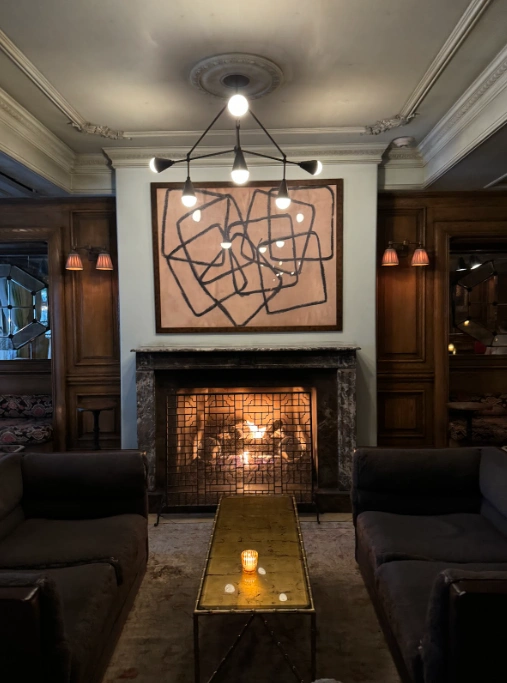
Photo credit: MetaphorDesign.com Location: Greenwich Village, New York City, New York Moulding Highlights: Decorative Wall Trim with Panelling, Cased Openings, Crown Moulding, Ceiling Trim
Modern and Contemporary Eras
Mid-Century Modern – Minimal wood baseboards and trims.
Modern Farmhouse – Shiplap walls and rustic-modern beams. Wainscotting topped with curved moulding
Industrial Modern – Raw wood moldings in functional designs.
Tropical Modern – Warm wood accents in modern tropical designs.
Neo-Baroque – Modern, elaborate wood trims.
Streamline Moderne – Curved wood moldings in interiors.
Shaker – Functional wood paneling and trims. Integrated pegs.
Cotswold Cottage – Charming English woodwork.
English Manor – Refined wood paneling and wider trims.
Northern European Cottage – Simple, cozy wood accents.
Pueblo Deco – Southwestern art deco with wood detailing.
Coastal Modern – Light, beach-inspired trims.
Spanish Revival Modern – Traditional Spanish elements with minimal wood.
Rust Belt Revival – Industrial settings with wood finishes.
Wharf Revival – Nautical trims for coastal homes.
Zen Garden Homes – Subtle trims complementing natural surroundings. Use of screens made of wood.
Cliffside Modern – Sleek homes with warm wood details.
Bespoke Contemporary – Custom wood moldings tailored to unique spaces.
Eclectic Bohemian – Mixed trims for artistic interiors.
Steamboat Revival – Modern adaptations of riverboat styles.
Mountain Modern – Rustic-modern wood accents for alpine homes.
Boho Chic – Relaxed, artistic interiors with painted wood trim details.
Nautical Revival – Coastal styles with wood railings and trims.
Global Modern – Fusing international influences with minimalist trims.
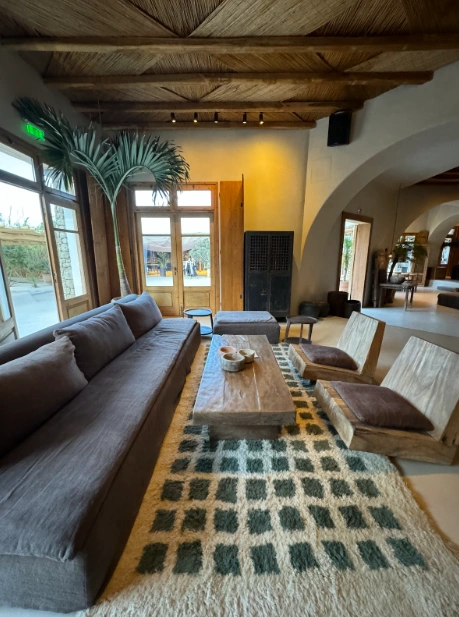
Photo credit: MetaphorDesign.com Location: Scorpios, Mykonos, Greece Moulding Highlights: Wood Trim at Doors
This eras tour of architectural styles illustrates how exterior and interior mouldings have evolved across history, adapting to various cultural, functional, and aesthetic needs. Discover your best options for custom moulding near you, perfect for enhancing any style you plan for on your next project. Wood moulding is made to order every week at San Francisco’s historic Lowpensky Moulding. Visit Lowpensky Moulding to obtain samples or begin your order.
DISCLAIMER
The information in this article is provided solely for general informational purposes and does not constitute professional, technical, legal, or regulatory advice. Codes, permitting requirements, and construction standards vary by jurisdiction. Consult a licensed architect, engineer, contractor, professional designer, and your local building authorities before beginning any project. Lowpensky Moulding assumes no responsibility or liability for actions taken based on the content of this article.