

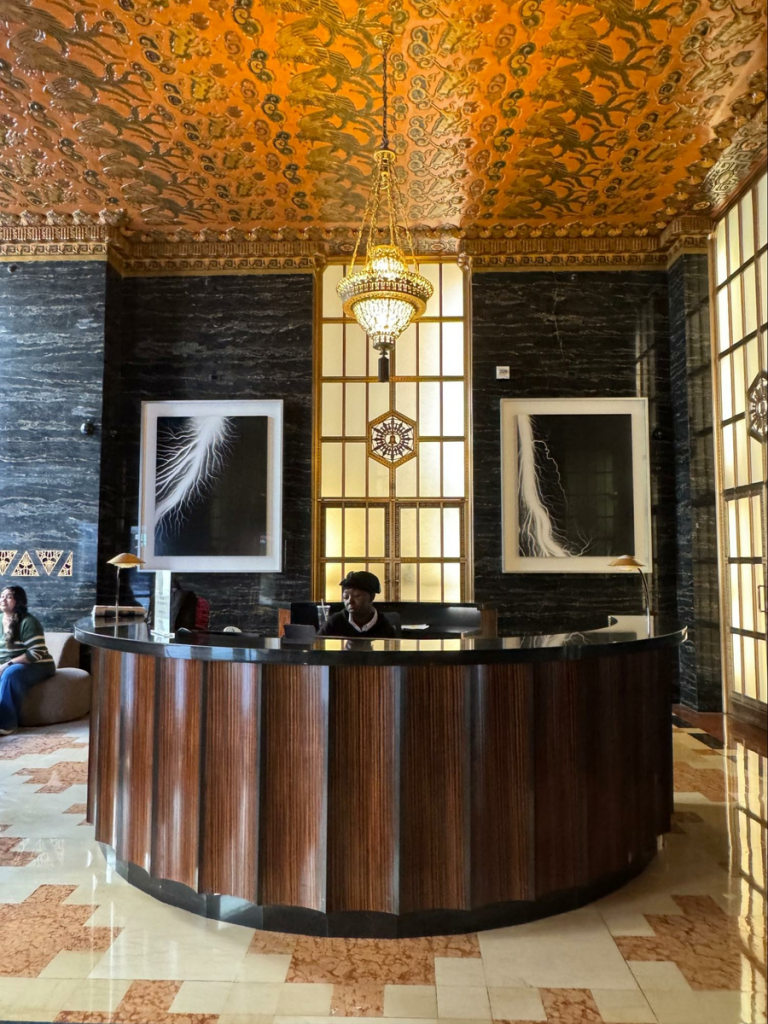
Photo credit: MetaphorEdge,
Location: San Francisco, California,
Wood Highlights: The entry is marked with history and a remarkable circular
reception desk featuring large scale moulding across the perimeter.
PacBell Heritage Lobby: SF History in Grand Trim Design
Jaw-dropping designs are the first words that come to mind when visiting the incredible Pacific Bell heritage lobby in San Francisco, made with intricate details inside and out. Wow, is often overheard when first timers walk through the entry and visitors clearly enjoy looking over the design of the entire lobby. The City of San Francisco sponsors a free walking tour that includes a stop at this remarkable landmark building full of grand trim and intricate designs.
The Welcoming Warmth of Wood
The reception desk with large scale natural wood moulding circling the front sets a memorable moment greeting visitors with a grand gesture. Concave and vertical placement of the moulding profile directly under the counter and with a helpful recessed toe kick, gives the desk its substantial appearance and subtly implies motion, perhaps a rotating gear from mechanical design. Look carefully and you can see bell shapes incorporated into the decorative design details on the building.
Inside and out the building design features symbols and details of the historic phone company. The natural wood moulding provides a rich counterpoint to the metal, marble, and polished surfaces in the interior.
Historic Significance of the Pacific Bell Building
Completed in 1925, the Pacific Telephone & Telegraph Building, commonly known as the Pacific Bell Building, is one of San Francisco’s most celebrated Art Deco landmarks. Located at 140 New Montgomery Street, the building was designed by architects Miller and Pflueger, with Timothy Pflueger later becoming one of the most influential Art Deco architects on the West Coast.
At the time of its completion, the building represented both technological progress and architectural ambition, serving as a hub for long-distance telephone operations during a period when telecommunications were rapidly transforming modern life. The lobby’s dramatic materials, polished stone, ornamental metalwork, and finely crafted wood details, were intentionally chosen to convey permanence, trust, and innovation to the public.
The building is recognized as a San Francisco Designated Landmark, and its interior lobby remains one of the city’s most intact examples of high-style Art Deco civic design. The careful integration of custom wood elements alongside marble and metal reflects the era’s belief that even utilitarian infrastructure deserved beauty and dignity.
Wood as Symbol and Structure
Within this historic context, the natural wood moulding at the reception desk plays more than a decorative role. Its scale and curvature reinforce the lobby’s architectural rhythm, grounding the space with warmth while echoing the precision and reliability that defined early telecommunications. Wood becomes both symbolic and structural, bridging human touch with industrial progress.
Large-Scale Moulding and the Power of the Curve
Large-scale moulding plays a critical role in civic interiors like the Pacific Bell lobby, where architectural elements must register clearly within a vast volume. At this scale, trim is no longer decorative, it becomes structural in perception, helping the human eye understand proportion, hierarchy, and movement within the space. The generous depth and curvature of the reception desk moulding allow it to hold its own against soaring ceilings, polished stone surfaces, and expansive floor plates.
Curved moulding, in particular, requires a high level of craftsmanship and precision. Radius profiles must be carefully milled, joined, and installed so that repetition remains consistent and shadow lines read smoothly from every angle. In the PacBell lobby, the continuous curve of the desk reinforces the building’s Art Deco language while guiding visitors intuitively through the space. The repetition of the profile creates rhythm, while the curve introduces motion—an architectural echo of the communications technology the building once housed.
This balance of scale, repetition, and curvature demonstrates how moulding can shape experience as much as it shapes form. When profiles are thoughtfully designed and executed, large-scale trim has the power to anchor monumental interiors while still offering warmth and approachability. It is a reminder that even in spaces built for infrastructure and efficiency, craftsmanship remains essential to creating environments that feel human, legible, and enduring.
Further Reading
Explore more from the Lowpensky Resources series:
- Above the Fireplace Mantel: Trim with Character
- Rolling in Deep Door Casings: Bold Transitional Trim
- Glossed Over: When Lacquered Moulding Makes the Moment
- Why SF Sun Warps Noe Valley MDF: The Wood Fix
Our blog Resources explores design for homeowners, architects, designers, installers, builders, and more to celebrate excellence in design. We highlight the impact of natural wood moulding, siding, stair designs and more as seen in homes, commercial and institutional buildings.
Ready to Make a Bold Choice
Lowpensky Moulding can build you a bold large-scale profile in any species of your choice, including FSC certified when requested, to create your next bold masterpiece. Move ahead on your project by sending us your profile and ask for a quote today. Our sales team is available to guide you in our process.
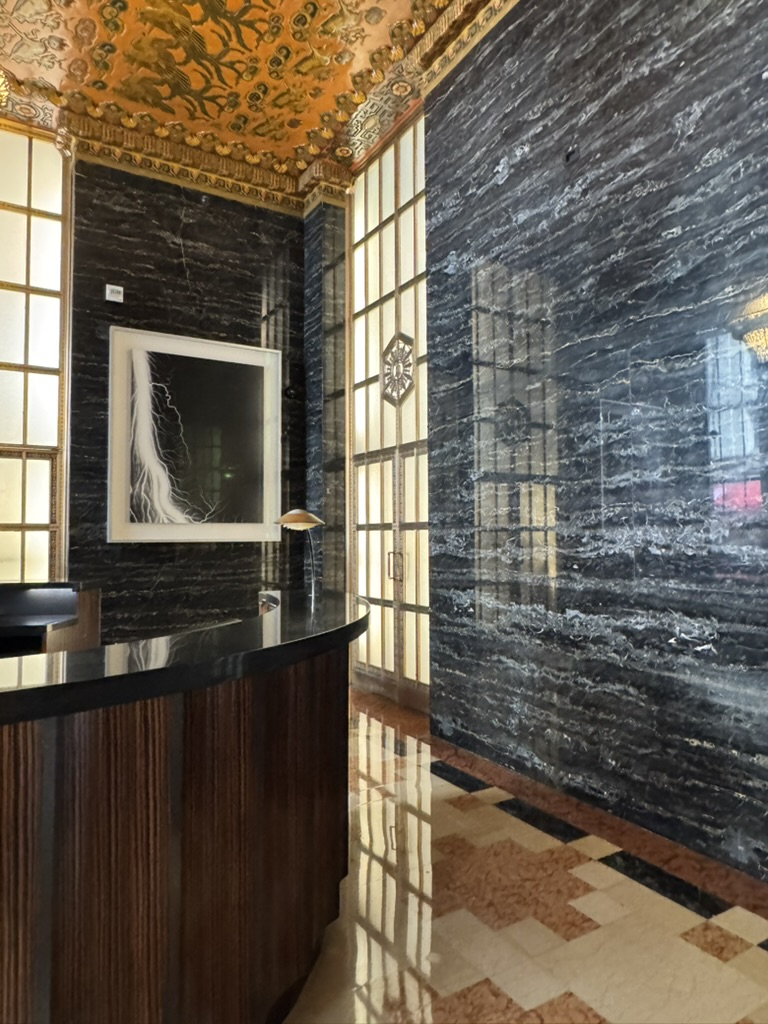
Photo credit: MetaphorEdge,
Location: San Francisco, California,
Wood Highlights: The stunning reception desk grand design with large scale moulding
made of natural wood provides a contrast with the glossy polished marble and metal finishes around.
DISCLAIMER
The information in this article is provided solely for general informational purposes and does not constitute professional, technical, legal, or regulatory advice. Codes, permitting requirements, and construction standards vary by jurisdiction. Consult a licensed architect, engineer, contractor, professional designer, and your local building authorities before beginning any project. Lowpensky Moulding assumes no responsibility or liability for actions taken based on the content of this article.