

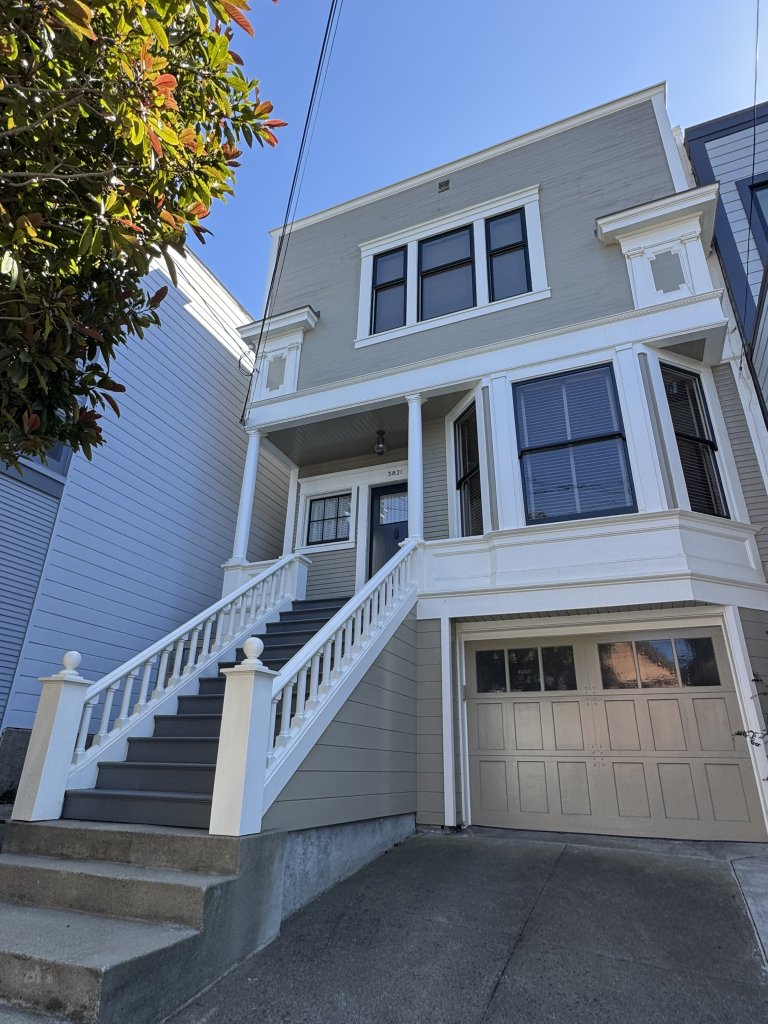
Location: Noe Valley, San Francisco, California,
Wood Highlights: Exterior facade illustrating neighborhood context and
building envelope conditions that influence interior door and window casing performance
Why SF Sun Warps Noe Valley MDF: The Wood Fix
In San Francisco neighborhoods like Noe Valley, material performance is shaped as much by environment as by design intent. Contractors and designers working in this area regularly account for sun exposure, slope, and daily temperature variation when selecting interior finish materials, especially interior door and window casing.
One pattern appears consistently: when evaluating wood trim vs. MDF in sun-exposed Noe Valley homes, contractors and designers often select natural wood interior door and window casings over MDF.
Moisture sensitivity is the most widely recognized limitation of MDF, particularly near interior windows where condensation, coastal humidity, or incidental moisture can occur. In San Francisco homes, that vulnerability is often compounded by direct sun exposure and daily heating and cooling cycles, which place additional stress on trim materials over time.
This article looks at why that choice shows up so frequently in the field, based on observed performance and project outcomes—not as installation guidance, but as material context.
What Contractors and Designers Observe in Noe Valley
Noe Valley homes often receive strong afternoon sun, particularly on south- and west-facing facades. Interior window and door openings in these locations experience more frequent temperature fluctuation and moisture exposure than trim installed on partitions further inside the home.
In projects throughout the neighborhood, contractors and designers note that trim materials respond differently over time, even when painted and detailed similarly.
In sun-adjacent conditions, MDF casing is more likely to show:
- Joint movement becoming visible through paint
- Edge swelling near window returns
- Hairline cracking at seams
- Softening or breakdown at corners
These conditions don’t appear immediately. They develop gradually, often after repeated heating and cooling cycles.
As a result, many professionals opt for natural wood casing in these locations, particularly at windows and doors. These observations inform how materials are evaluated at openings exposed to direct sun.
Why Natural Wood Casing Is Often Chosen Instead
Natural wood behaves differently than engineered fiber products. While no material is immune to movement, wood expands and contracts in more predictable ways, especially when properly milled and acclimated.
In Noe Valley projects, designers and builders frequently select painted wood casing because it:
- Maintains sharper edges over time
- Handles thermal movement more consistently
- Is less prone to irreversible swelling
- Can be repaired or refinished if needed
These attributes make natural wood door and window casing a practical choice in areas where sun exposure is unavoidable.
Painted Finish, Different Performance
Over time, the performance differences between wood trim vs. MDF becomes more visible, particularly at interior window and door openings exposed to sun and moisture. From a visual standpoint, painted MDF and painted wood trim can look similar at completion. The distinction becomes clearer with time.
In the Noe Valley homes seen in this article, painted natural wood casing was clearly selected intentionally, even though MDF is an available option. The decision was driven by experience, not aesthetics alone.
Professionals working in San Francisco understand that material selection near windows is less forgiving than in fully interior conditions. Some contractors and designers note that while MDF may appear to offer short-term savings for select interior applications, it can lead to maintenance and performance issues over time (particularly when used for door and window casing) that are not always anticipated at the outset. Trade publications including Fine Homebuilding and the Journal of Light Construction have discussed the increased sensitivity of MDF trim to moisture and temperature changes, particularly near windows and exterior-adjacent conditions.
Why This Matters at Windows and Doors
Windows and doors represent transition zones, between interior and exterior, shade and sun, warm air and cool. Trim at these openings is exposed to more environmental stress than trim on interior partitions.
That’s why contractors and designers often differentiate casing specifications by location, choosing natural wood window and door casing where performance demands are higher.
This approach reflects observed behavior over many projects, not a one-size-fits-all rule.
Material Selection Is a Project Decision
Every project is different. Climate exposure, detailing, paint systems, and construction sequencing all influence outcomes. What we do see, repeatedly, is how experienced professionals adjust material choices based on San Francisco conditions, particularly in neighborhoods like Noe Valley.
Natural wood casing is frequently part of that adjustment. Material choices impact performance directly.
FAQ’s About MDF and Wood
Why do some contractors avoid MDF casing near windows in San Francisco?
Contractors and designers working in San Francisco note that areas near windows are subject to greater temperature fluctuation due to direct sun exposure and, at times, moisture. In these conditions, MDF trim is more likely to show movement, edge swelling, or joint visibility over time, which can affect long-term appearance.
Is natural wood casing commonly used in sun-exposed homes?
Yes. In sun-exposed homes—particularly in neighborhoods like Noe Valley—many contractors and designers commonly specify natural wood casing at doors and windows because it tends to respond more predictably to environmental changes when properly milled and finished.
Does painted wood casing perform differently than MDF over time?
Professionals observe that while painted MDF and painted wood casing can appear similar at installation, differences often emerge over time. Painted wood casing typically maintains sharper edges and allows for repair or refinishing, whereas MDF may show signs of wear or movement sooner in demanding locations.
Is MDF ever used outdoors?
No. MDF is an interior material and is not designed or rated for exterior use. Contractors and designers specify exterior-rated materials for outdoor trim because MDF absorbs moisture, swells irreversibly, and breaks down when exposed to weather. For exterior applications, materials are selected based on their ability to handle sun, moisture, and temperature variation.
Project photographs are shown for illustrative purposes only. Some projects may include moulding fabricated by Lowpensky; unless expressly noted, material sourcing is unknown.
Further Reading
Explore more from the Lowpensky Resources series, including upcoming articles:
- San Francisco Casings Resist Rot in Fog & Salt Air
- San Francisco Luxury: When Retail Casings Look Wrong
- Presidio Heights: Luxury Walnut & Mahogany Casings
- Not Glossed Over: Lacquered Moulding Makes the Moment
Find the Wood Fix at Lowpensky
Contractors and designers working in San Francisco often consider location-specific performance when selecting door and window casing material.
Lowpensky Moulding fabricates custom wood casing in natural wood for residential and commercial projects throughout the Bay Area, supporting material selections specified by design and construction professionals.
If your project calls for custom wood door or window casing, our team can prepare your order to your specifications in size and species. Visit the Lowpensky catalog to see standard profiles or contact us for custom designs.
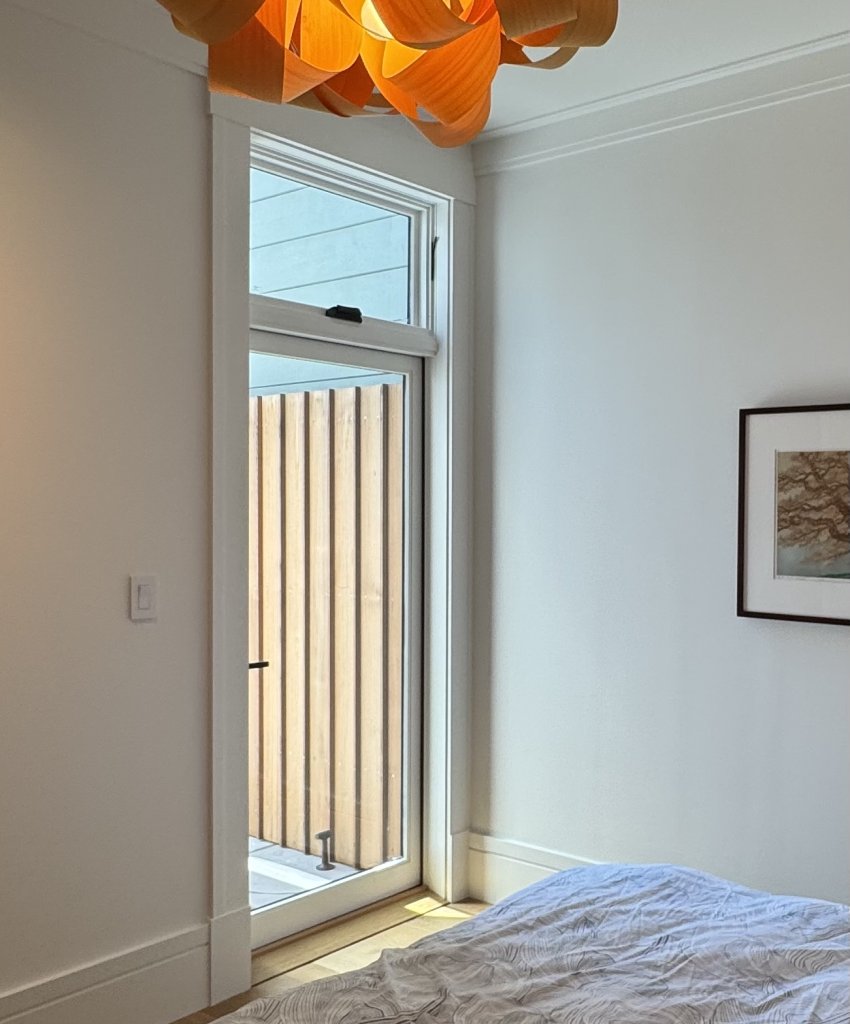
Location: Noe Valley, San Francisco, California,
Wood Highlights: Designers and Architects have noted that afternoon heat gain is most
pronounced at south- and west-facing facades, where trim at interior window and door openings experience greater thermal stress over time.
DISCLAIMER
The information in this article is provided solely for general informational purposes and does not constitute professional, technical, legal, or regulatory advice. Codes, permitting requirements, and construction standards vary by jurisdiction. Consult a licensed architect, engineer, contractor, professional designer, and your local building authorities before beginning any project. Lowpensky Moulding assumes no responsibility or liability for actions taken based on the content of this article.