

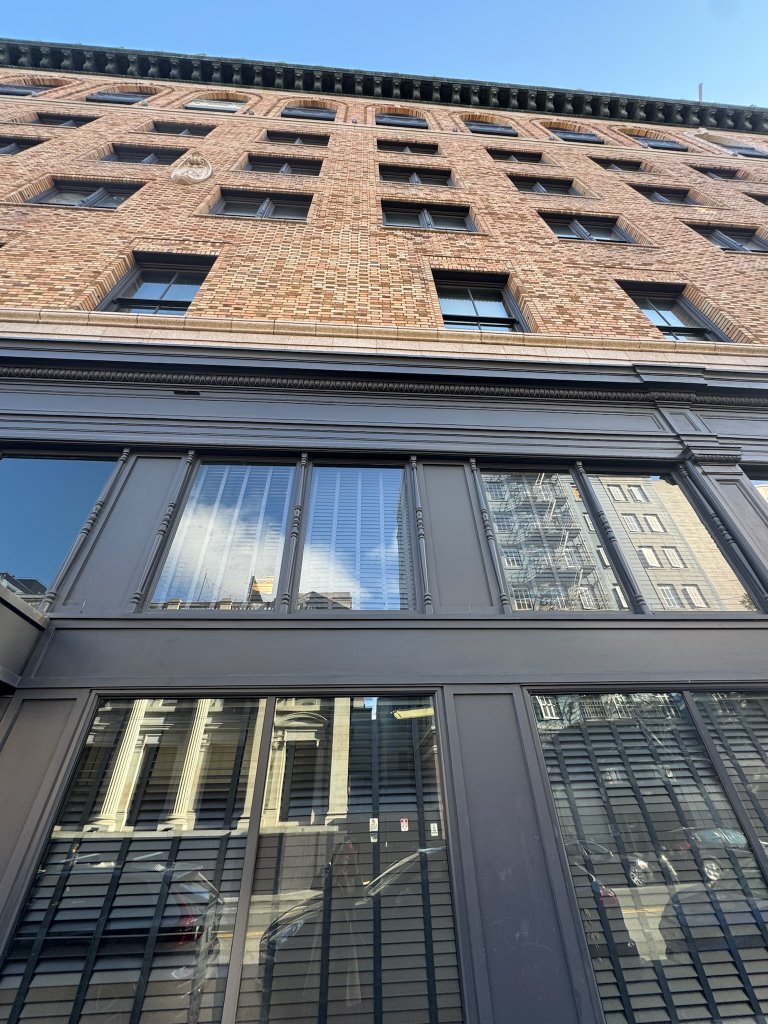
Location: San Francisco, California,
Wood Highlights: Exterior window casings on a historic commercial facade in San Francisco’s Mid-Market district,
where wood, brick, and masonry must withstand fog, air movement, and long-term moisture exposure.
San Francisco Casings Resist Rot in Fog & Salt Air
San Francisco’s architecture is shaped as much by climate as by design. Daily fog, salt air carried inland from the Pacific, and sharp wet-dry cycles quietly yet consistently stress exterior building materials year after year. Among the first architectural elements to show failure are exterior trim components, especially exterior window casing, where moisture exposure, air movement, and sun intersect.
In neighborhoods across the city, casings that are not well designed for San Francisco conditions often show peeling paint, softened wood, and rot far earlier than expected. Performance, not appearance, ultimately determines longevity.
Fog, Salt Air, and Moisture Cycling: San Francisco’s Hidden Test
Research by scientists affiliated with the University of California, Berkeley, published by the American Geophysical Union, documents that coastal fog patterns in Northern California create frequent moisture saturation followed by rapid drying on exterior surfaces. These conditions produce exposure patterns in San Francisco that are more demanding than those found in many seaside towns where moisture and salt exposure tend to be more consistent rather than as cyclical. Fog settles overnight, saturating exterior materials, then retreats as temperatures rise. Salt carried inland from the Pacific draws moisture deeper into wood fibers, while afternoon sun accelerates drying.
For exterior window casing, this ongoing expansion and contraction places stress on joints, coatings, and end grain. Even well-maintained facades can show premature deterioration when moisture is repeatedly absorbed and released over time.
Why Exterior Casings Fail First
Professionals note that exterior casings occupy architectural edges where water collects and movement is greatest. Failure often begins at:
- Exposed end grain near sill returns
- Overly deep profiles that trap moisture
- Poor transitions between casing, flashing, and surrounding materials
Once moisture migrates behind the surface, decay progresses invisibly. By the time rot becomes visible, replacement is often unavoidable. Architects and builders report that the exterior window casing is therefore assessed with attention beyond surface appearance alone.
Wood, Masonry, and Mixed Materials on San Francisco Facades
Many of San Francisco’s most durable buildings combine wood trim with brick or masonry facades. These transitions demand precision. Wood and masonry move differently, and careless detailing can trap moisture at the joint.
Contractors and architects report that projects that perform well often specify custom wood casings sized and proportioned to work with adjacent materials, based on architectural and builder specifications. Thickness, grain orientation, and profile restraint all play a role in helping wood shed water rather than absorb it.
On historic commercial façades in downtown San Francisco’s Mid-Market district, wood window casings integrated with brick and masonry demonstrate how proportion and detailing, not ornament, support long-term performance.
Wood Species Matter in Exterior Applications
Across San Francisco projects, builders and contractors consistently limit exterior trim to a small group of wood species known to perform better in exposed conditions. Redwood, cedar, and mahogany are among the most commonly specified species for exterior window casing and exterior door trim, while many interior-grade species are not used outdoors.
Industry guidance from sources such as the USDA Forest Products Laboratory notes that exterior durability is closely tied to a species’ resistance to moisture absorption, decay, and dimensional movement. As a result, custom fabrication orders for exterior casings typically reflect these material preferences, while interior species are more often reserved for protected conditions.
In addition to material selection, industry sources widely recognize surface preparation and finishing as critical to exterior longevity. Proper priming, sealing, and painting of exterior wood trim, particularly at end grain and joints, are commonly cited by professionals as important contributors to long-term performance. While fabrication provides the starting point, final durability depends also on installation and finishing practices executed on site.
Exterior Door Trim vs. Window Casings: Different Loads, Different Logic
While windows experience frequent moisture exposure, doors endure even greater stress. Exterior door trim and the surrounding door surround must withstand direct rain, physical contact, and constant use.
In transitional conditions, such as doors opening onto covered but open-air corridors, trim behaves more like an exterior element than an interior one. Simplified profiles and durable detailing matter far more than decorative refinement. Applying interior trim logic in these environments often leads to early failure, as many building owners have reported.
Interior Thinking Is the Root of Many Exterior Failures
A common mistake is utilizing interior trim species and profiles for outdoor use. Wood window casings designed for interiors emphasize visual rhythm and fine detail, not drainage or exposure management.
Outdoors, those same details can become liabilities. Architects and builders report that exterior trim performance is closely tied to water shedding, airflow, and long-term movement. Even subtle changes in profile depth or edge treatment can dramatically affect how moisture behaves over time.
Historic Precedent and What Still Works
Some historic door casings and exterior trims across San Francisco have endured for generations. Their longevity is not accidental. These elements were often thicker, simpler, and proportioned to account for weather long before modern coatings existed.
What matters is not only historic style, but historic logic, mass where exposure is greatest, restrained profiles, and joinery that anticipates movement. These principles remain relevant today.
A Case Study in Long-Term Exterior Performance
The exterior rehabilitation of the San Francisco Proper Hotel in the Mid-Market district, once known as the Renoir Hotel, illustrates how careful material integration can extend the life of exterior trim in San Francisco’s fog-heavy climate. The architectural conversion was led by Hornberger + Worstell, with Cahill Contractors serving as general contractor, balancing historic fabric with contemporary use.
On facades like this, exterior window casing integrated with brick and masonry must manage moisture at every joint. Success depends on proportion, material compatibility, and execution, not surface treatments alone.
Specifying Casings That Last in San Francisco
Across San Francisco projects, exterior trim is often specified by architects and builders with climate exposure in mind.
Durable exterior window casing in San Francisco depends on:
- Climate-aware detailing
- Material selection based on exposure, not cost alone
- Installation practices that respect water paths and drying cycles
Builders and architects report that exterior casings specified with exposure in mind, rather than treated as purely decorative trim, tend to show longer maintenance cycles over time.
Performance Is Primary
In San Francisco, longevity is a marker of quality. Casings that resist rot, maintain crisp edges, and age gracefully reflect a deep understanding of place.
Choosing the right exterior window casing is not about overbuilding—it is about building correctly for one of the most demanding urban climates in the country.
FAQ’s About Exterior Casings
Why do exterior casings rot faster in San Francisco than in other cities?
Frequent fog, salt air, and rapid wet-dry cycling repeatedly saturate and dry exterior trim. Exterior window casing is especially vulnerable because it sits at the intersection of wall assemblies, water runoff, and air movement.
Is paint enough to protect exterior window casing from rot?
Industry sources note that the long-term performance of exterior window casing is influenced by proportions, drainage paths, and compatible materials, in addition to surface coatings.
What is the difference between interior and exterior wood window casings?
Interior wood window casings are designed for controlled environments. Exterior casings must manage moisture, airflow, and movement. Using interior profiles or species outdoors often leads to premature failure.
Project photographs are shown for illustrative purposes only. Some projects may include moulding fabricated by Lowpensky; unless expressly noted, material sourcing is unknown.
Further Reading
Explore more from the Lowpensky Resources series:
- SF Luxury: When Off the Shelf Door Trim Looks Wrong
- Presidio Heights: Luxury Walnut & Mahogany Casings (coming soon)
- Restoring SF Victorians with Authentic Wood Casings (coming soon)
- Why SF Sun Warps Noe Valley MDF: The Wood Fix
Built for San Francisco, Made for Performance
Lowpensky manufactures made-to-order wood moulding, exterior window casing, and exterior door trim profiles in San Francisco. Drawing from a deep catalog and custom fabrication capabilities in commercially available species, including FSC-certified wood, Lowpensky produces casings used in historic restorations and contemporary facades where material choice and fabrication quality matter.
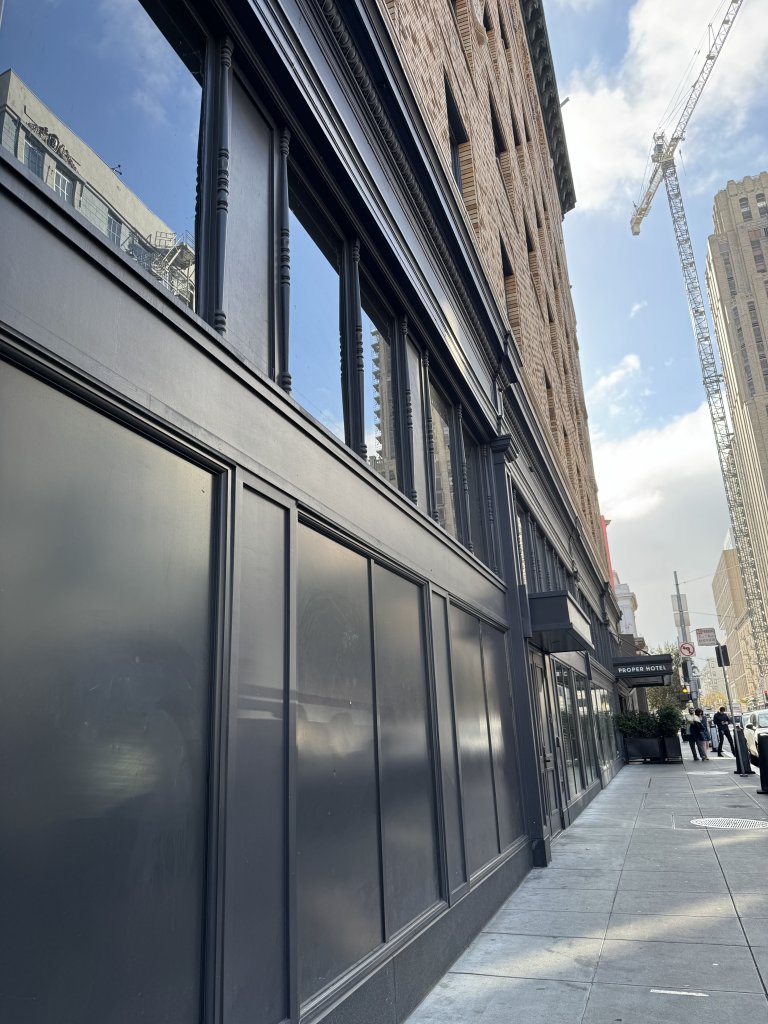
Location: Downtown, San Francisco, California,
Wood Highlights: Door and window casings with extensive
exterior trim performing both protective and aesthetic roles
DISCLAIMER
The information in this article is provided solely for general informational purposes and does not constitute professional, technical, legal, or regulatory advice. Codes, permitting requirements, and construction standards vary by jurisdiction. Consult a licensed architect, engineer, contractor, professional designer, and your local building authorities before beginning any project. Lowpensky Moulding assumes no responsibility or liability for actions taken based on the content of this article.