


Location: Presidio Heights, San Francisco, California,
Wood Highlights: Stain-grade window casings with built-in cabinetry. Dark natural finish shows natural wood grain and depth across custom millwork, highlighting the importance of wood species selection before the stain or clear coat is determined.
Presidio Heights: Luxury Walnut & Mahogany Casings
The historic, luxury homes in Presidio Heights were built at a gracious scale, with 9- to 12-foot ceilings, deep and complex window reveals, and door openings that read as architectural events. In rooms like these, the wood window casing is not an insignificant background detail. It’s an impactful visual element, and when the species is wrong, designers report the profile may have looked right in the drawing and yet be very wrong in the room.
As the San Francisco Decorator Showcase opens each April, similar principles can be observed across newly designed interiors, where material selection and millwork detail define how a space is experienced.
When wood window casing carries architectural weight, species selection is as consequential as profile geometry.
A wood window casing is the trim that frames the interior side of a window opening, covering the gap between the window frame and the surrounding wall. When windows are replaced, the new unit rarely includes interior casing. Casing is often specified and installed separately. In renovation and restoration work, the casing is one of the last finish decisions and yet one of the first elements a visitor notices.
The living room pictured above and shown in more detail here illustrates what stain-grade hardwood achieves in a Presidio Heights interior: mood-enhancing dark natural finish, visible grain across custom millwork, and built-up window casings that anchor the room’s architectural character, establishing a framework that supports increasingly specific and individualized design details.
Why Designers and Architects Choose Walnut and Mahogany
When architects and interior designers specify luxury interior trim for Presidio Heights projects, walnut and mahogany come up consistently, and the reasons follow a clear pattern that Lowpensky has observed across many projects.
Walnut is often specified for contemporary and transitional interiors. Its multi-dimensional brown with warm gray and subtle purple undertones reads as modern and sophisticated. Designers report it rarely needs staining, a clear coat or oil finish brings out its natural depth and luster without altering the color. What designers also report, again and again, is that walnut casing in a high-ceiling room introduces a visual complexity that shifts in moving daylight, something no paint-grade softwood replicates. The Architectural Woodwork Institute separates stain-grade and paint-grade specifications in its quality standards precisely because the material requirements and performance are different, not just the final finish. Walnut’s grain holds a master maker’s detail with a precision that justifies the distinction.
Historians, architects and designers note mahogany is often specified for period restoration and formal interiors. Its warm reddish-brown tone deepens over time rather than fading, which is part of why architects working on historic properties have chosen oiled mahogany trim and casing for generations. The Forest Products Laboratory documents mahogany’s dimensional stability as favorable for coastal climates, meaning it resists warping under the humidity cycles San Francisco is known for. For window casings specifically, where the casing sits at the thermal boundary between interior and exterior, that stability is a performance specification, not just an aesthetic preference. Architects working in Presidio Heights report that mahogany door casing and window casing in period homes deliver a visual warmth and authenticity that no other species matches in that context.
For cost context, walnut and mahogany cost more per board foot than paint-grade poplar (roughly 2 to 4 times the material cost), but a clear-finish application eliminates the labor and materials of a full paint cycle. In luxury interiors and historic buildings, the species premium is also the authenticity premium, the right wood in the right room is the point of a quality specification. The expectations are high and the material is appreciated and coveted long after installation.
San Francisco’s Architectural History Lives in These Species
The Victorian and Edwardian homes in Presidio Heights were originally finished with stain-grade hardwood casing profiles, selected for their grain, their stability in San Francisco’s coastal climate, and their ability to hold a crisp milled edge over decades of use. When those profiles are replaced with commodity softwood stock, the architectural character shifts in ways that are difficult to name but easy to see, especially by professionals and sophisticated building owners.
Lowpensky has milled custom profiles in San Francisco since 1947 and has operated from Palou Ave for the past 45 years. The 650+ LM-Series archive spans casing profiles from 1870 to the present. The NPS Preservation Briefs on historic interior woodwork document the proportional systems and material standards that define these building eras, and the species that served them.
Originally built for the Sutro family, a noteworthy historic renovation in Presidio Heights by local firm Schafer & Co highlights how preservation and modern living can be balanced without compromising architectural integrity. Projects like this reinforce why species selection, not just profile geometry, determines whether a restoration feels authentic or out of place.
UNIQUE LOWPENSKY INSIGHT
What Belongs Here
The question is not only what looks good. It’s what belongs here. Walnut and mahogany were often installed in these rooms when they were first built. Designers specify them because they hold a crisp profile line that softer species can’t, and have a meaningful impact that can be viscerally felt by visitors.
A local SF mill that has held many historic profiles for nearly 80 years makes that possible. Authentic millwork by Lowpensky is made in San Francisco’s revitalized southeast corridor, neighbors to Dogpatch and Mission Bay.
Paint-grade trim like poplar reflects light and has a lighter visual impact. Walnut and mahogany do the opposite. They make the casing light absorbing, a warm, enveloping presence in the room.
Clear Coat or Paint
For anyone new to specifying trim, the wood species decision comes down to one question: will the finish be transparent or opaque?
If the trim will be painted, species selection is about stability and workability. Poplar is a popular choice by customers at Lowpensky for interior paint-grade work. It machines cleanly, holds paint well, and performs reliably indoors.
If the trim is finished with a clear coat, oil, or stain, the species becomes a significant design decision with real consequences for the finished room and how it is perceived. Among specifiers Lowpensky works with regularly, custom window casing in walnut tends toward contemporary and transitional interiors, while mahogany is often seen as the choice in period restoration work. Both materials are associated with interiors where profile shape and scale reinforce the architectural intent.
How to Get Started
Before committing to a full production run, Lowpensky can mill an 8-foot test board in the actual species using the planned knife setup. This lets the specifier hold the real profile in the real material, evaluate how the grain reads against the finish, and approve the match before the full order runs. To begin the process, request a quote with the profile, species, and approximate linear footage for the project, and indicate if a sample run is desired prior to full production.
Builders often cut the board down to make smaller samples for convenience and use the remaining material if approved. For walnut and mahogany in particular, where grain character varies board to board, the sample run helps close the gap between what was drawn and what gets installed. Designers and architects report this can support final decisions across this and other profiles and materials for the project. Seeing it together with other samples is a key part of a thoughtful, meticulous process.
Send a 6-inch piece of the existing casing, or a photo and drawing if starting fresh. Lowpensky will match it against the LM-Series archive. If the profile is there, no new knife grind is needed. If it is not, a custom knife is ground to 1/32″ tolerance and a sample piece can be produced for approval before the production run.
The quote requires the profile with dimensions, the species, and the total linear footage. For luxury interior trim in stain-grade custom wood, species confirmation happens before production begins. Lead time and material requirements are confirmed at the quote stage.
FAQs About Window Casings
Why do architects specify walnut and mahogany for Presidio Heights casings?
Both wood species deliver what paint-grade softwoods cannot: visible grain that reads as a design element in its own right. Designers report that walnut and mahogany carry the visual weight that Presidio Heights ceiling heights demand, and that commodity softwood stock cannot replicate that depth or grain richness in a room where the casing is a primary architectural feature.
What is the difference between stain-grade and paint-grade wood window casing?
Stain-grade species, including walnut, mahogany, white oak, and cherry, can be finished with clear coat or tinted oils that let the grain show through. Paint-grade species, including poplar, pine, and commodity softwood stock, are usually finished opaque. According to the Forest Products Laboratory, stain-grade hardwoods are generally denser and hold sharper machined edges, so if you’re specifying a clear-finish casing, the species is not interchangeable with a paint-grade equivalent.
Can Lowpensky match an existing walnut or mahogany casing profile in a historic Presidio Heights home?
Yes. The LM-Series archive includes walnut and mahogany casing profiles from the Edwardian and Arts and Crafts eras common to Presidio Heights. If the profile is in the archive, a new knife grind isn’t necessary. If it isn’t, a custom grind is produced to 1/32″ tolerance using the species you specify. You can request FSC certified wood as well.
Further Reading
Explore more from the Lowpensky Resources series:
SF Luxury: When Off The Shelf Door Trim Looks Wrong
Why retail profiles fail proportionally in San Francisco’s historically scaled interiors, the shadow line and proportion problem that shows up after installation.
San Francisco Casings Resist Rot In Fog & Salt Air
Exterior casing performance in San Francisco’s coastal climate, substrate selection, and species choices that survive fog and salt air.
Why SF Sun Warps Noe Valley MDF: The Wood Fix
The material science behind why MDF fails in San Francisco’s climate and what wood species hold up where MDF doesn’t.
Get it made right at Lowpensky — send us a sample or drawing, and we’ll show you what’s possible with our precision quality work.
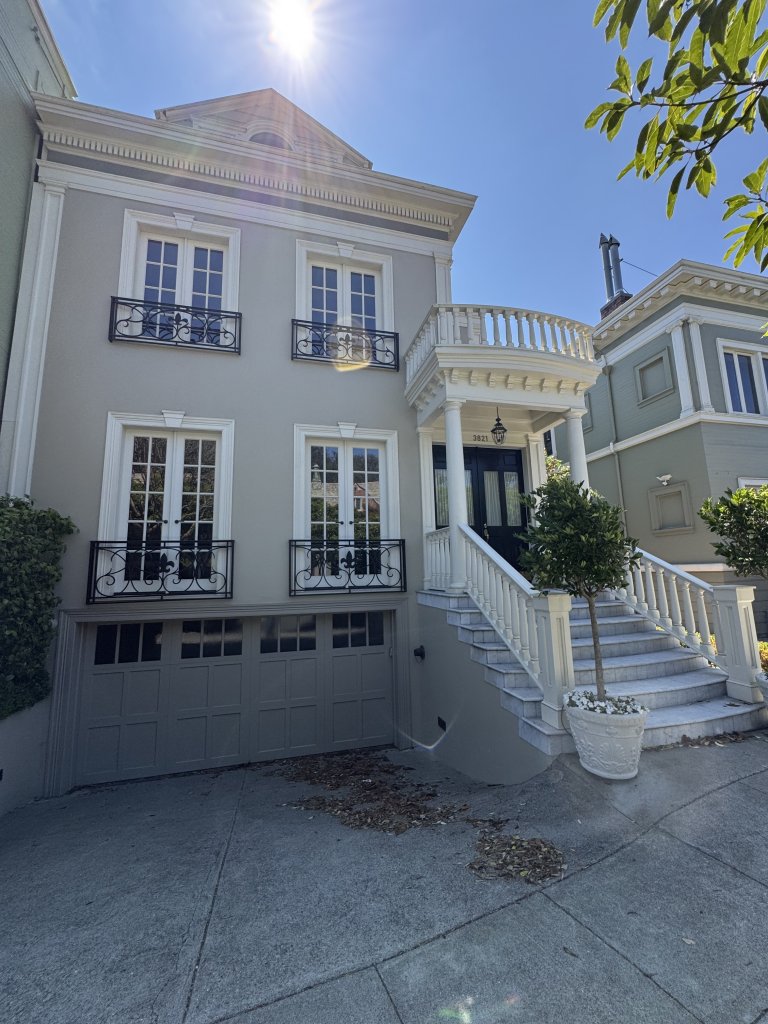
Location: Presidio Heights, San Francisco, California,
Wood Highlights: Window casings are specified for interior and exterior applications and the species choice impact performance and aesthetic concerns.
DISCLAIMER
The information in this article is provided solely for general informational purposes and does not constitute professional, technical, legal, or regulatory advice. Codes, permitting requirements, and construction standards vary by jurisdiction. Consult a licensed architect, engineer, contractor, professional designer, and your local building authorities before beginning any project. Lowpensky Moulding assumes no responsibility or liability for actions taken based on the content of this article.